
Last Updated on February 24, 2026 by Leslie
You spend hours perfecting your video, hit publish, and… crickets. Meanwhile, someone films a 30-second clip on their phone and goes viral. What gives?
Here’s the uncomfortable truth: chasing perfection can quietly kill momentum. Not because polish is “bad,” but because most viewers reward connection first—and production value only after.
This guide breaks down why authentic videos often outperform polished ones, the minimum quality standard you actually need, and a practical way to publish without getting stuck in perfectionism paralysis.
Why Viewers Prefer Authentic Content
Research from Synthesia reports that 78% of consumers say they prefer videos that feel authentic rather than highly produced. It’s not a tiny edge. It’s a clear signal: people want content that feels human, not commercial.
That preference also fits what you see on every platform. Audiences are surrounded by polished ads and brand-style edits. Anything that looks “too produced” can trigger instant skepticism—like they’re about to be sold to.
The Psychology Behind Authentic Connection
Authentic videos feel like a real interaction. Natural pauses, small mistakes, and genuine reactions create the sense that you’re talking to a person—not watching a performance.
Imperfection can actually increase trust. When your delivery isn’t over-scripted, viewers read it as lower manipulation and higher sincerity. That’s why so many people describe great creator videos as “like catching up with a friend.”
The Talking-Head Paradox
Here’s the paradox most creators hate hearing: a simple talking-head video with clear ideas often beats a cinematic edit with nothing to say.
A compelling point delivered on a phone can outperform a boring message shot on expensive gear. That’s why “waiting for the right setup” becomes a hidden form of procrastination: you can always delay by upgrading something.
Audio Quality: The One Thing That Actually Matters
If you improve just one technical element, make it audio.
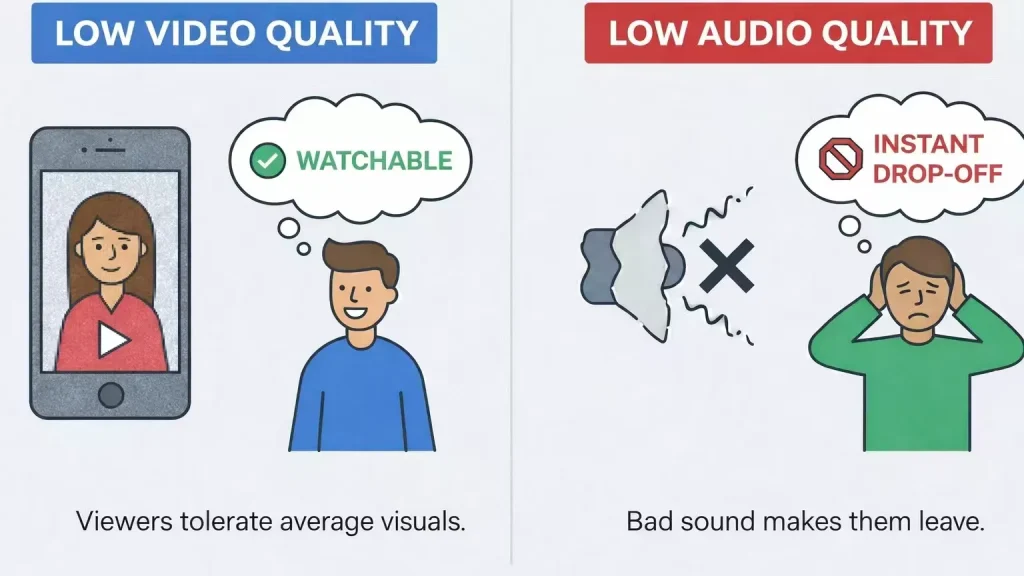
Viewers tolerate average video quality surprisingly well. They do not tolerate muffled voices, echo, or harsh background noise. If they have to strain to understand you, they leave.
A basic external mic (even a budget USB mic or lav mic) usually gives a bigger upgrade than a new camera—without making your content feel overly produced.
Finding Your Balance: When Polish Does Matter
Authentic doesn’t mean sloppy. There’s a difference between raw-and-real and unwatchable.
The “Good Enough” Non-Negotiables Checklist
Before you publish, run this good enough checklist:
- Audio: voice is clear, minimal echo, no distracting background noise
- Lighting: your face is visible (no heavy shadows / backlit silhouette)
- Framing: stable shot (tripod, shelf, or stable surface—no handheld shake)
If you pass these three, your quality is “good enough.” Everything else is optional.
What’s Optional (and Often Overrated)
- Fancy transitions
- Color grading
- B-roll everywhere
- 4K camera upgrades
These can help later, but they rarely fix a weak idea or unclear message.
Platform-Specific Expectations
Different platforms reward different “types” of polish:
YouTube (Long-form)
- Clear structure and pacing matters more than cinematic visuals
- Audio + steady framing is the baseline
- Viewers stay for depth, not flash
TikTok / Reels / Shorts
- Your first 1–2 seconds matter more than lighting perfection
- Captions and on-screen text pull huge weight
- Fast clarity beats smooth editing
One Universal Requirement: Captions
A large share of social video is watched with sound off—especially in feed-based platforms. Captions aren’t “nice to have.” They’re a distribution feature. Even simple auto-captions are usually better than none.
The First 20 Videos Mindset
Perfectionism doesn’t usually look like fear. It looks like “just one more tweak.”
A healthier mental model: treat your first 20–30 videos as reps. They’re not your legacy. They’re how you find your on-camera rhythm, your pacing, and your topics that actually land.
A simple publishing rule that keeps quality and momentum:
- Post 2–3 solid videos per week
- Each new video improves one thing only (audio, hook, lighting, pacing, or captions)
That keeps you moving without turning every upload into a three-day project.
Tools That Bridge the Gap
If you like the authentic style but hate the time sink, use tools for the boring parts—not to “fake” personality.
For example, tools like GStory.ai can help with:
- Auto-subtitles so you don’t spend hours captioning
- Light enhancement / upscaling when your footage is usable but slightly soft
- Clip-making to repurpose one authentic long take into multiple shorts
The goal isn’t to look like an ad. It’s to remove friction so you publish consistently.
FAQs
Do I need expensive equipment to create engaging videos?
No. In most cases, a smartphone, decent lighting (even window light), and a basic external mic are enough. Upgrade only when a specific limitation keeps recurring—like echo you can’t fix, or low-light noise that ruins clarity.
Will imperfect videos hurt my brand or credibility?
Minor imperfections usually help more than they hurt because they signal you’re real. What hurts credibility is unclear messaging, bad audio, or wasting the viewer’s time.
How do I know if my video quality is “good enough”?
Use the three-point test: clear audio, visible lighting, stable framing. If those are true, you’re past the quality threshold. After that, focus on your hook, your message, and your consistency.
Conclusion
Viewers don’t reward perfection as often as creators hope. They reward clarity, sincerity, and consistency.
Keep the baseline: clear audio, decent lighting, stable framing. Then stop polishing and start publishing. Your audience is looking for a real person they can trust—not a flawless production.
Leave a Reply